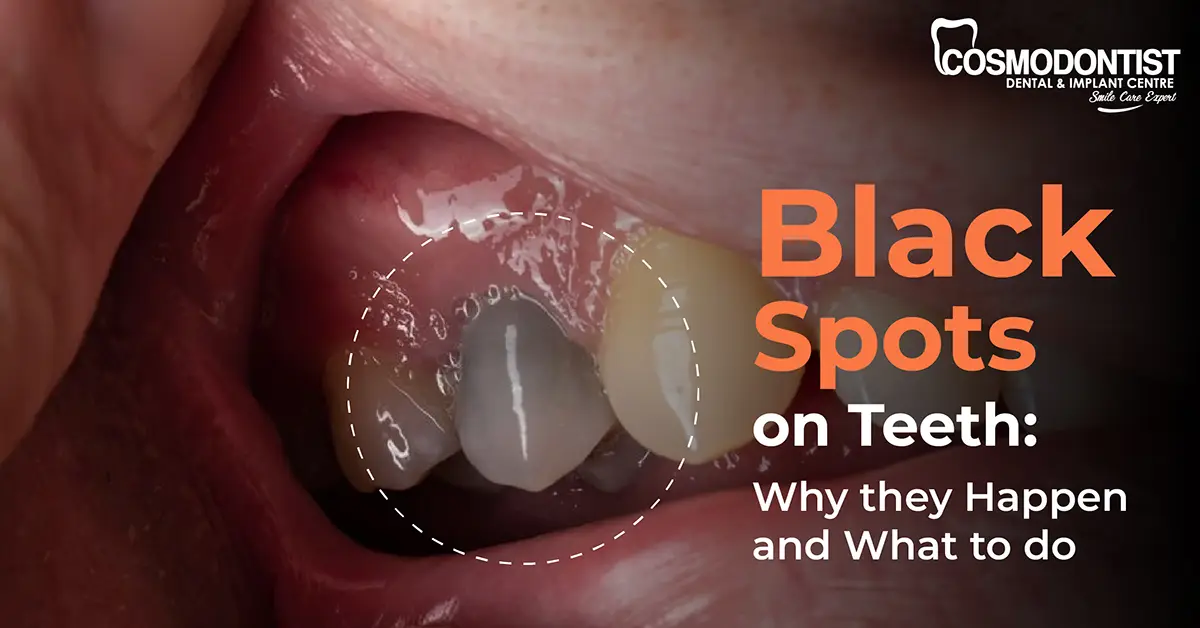
Finding a dark mark on a tooth can be unsettling. You may brush the area several times and still see the same spot. In some cases, it is only a stain left by tea, coffee or tobacco. In others, it may be hardened tartar, an old filling or an early sign of tooth decay.
The colour of the mark does not reveal the full problem. Its position, texture and depth matter too. A dentist can check whether the spot sits on the enamel or has developed inside the tooth. At the Cosmodontist Dental Clinic, the dentist first identifies the cause before suggesting cleaning, repair or cosmetic care.
Black Spots on Teeth: Why They Happen and What to Do for a Healthier Smile
Dark spots can appear near the gums, between two teeth or inside the deep grooves of molars. A surface mark may not cause pain, while decay can continue growing without obvious symptoms during its early stage.
Do not scrape the tooth with a pin or sharp object. This can damage the enamel and injure the gums. When a mark does not disappear after normal brushing, a dental check-up is the safest way to find out what it is.
What Causes Dark Marks on Teeth?
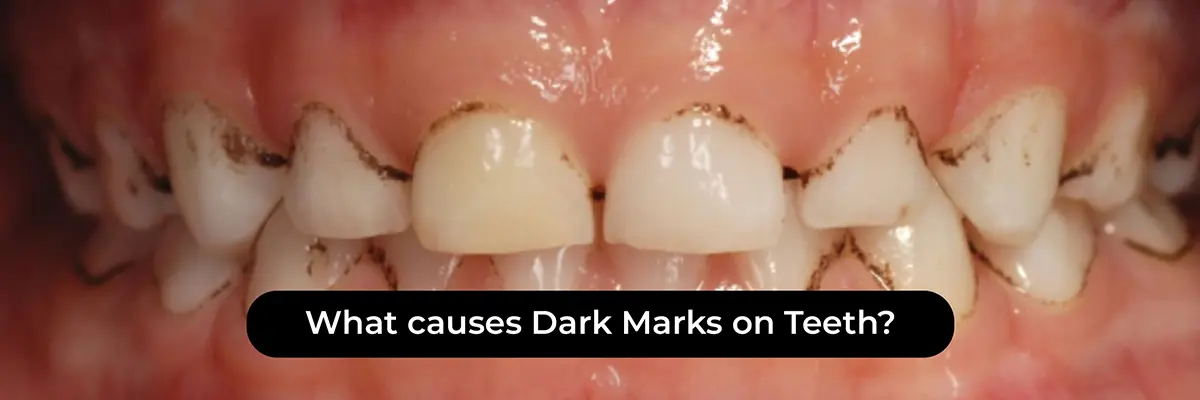
Black Tartar Near the Gumline
Plaque is a soft layer of bacteria, saliva and food particles. Brushing and flossing remove most plaque, but any layer left behind can gradually harden into tartar.
Black tartar usually forms close to or below the gumline. It may absorb colour from tea, coffee, tobacco or bleeding gums. Unlike ordinary food debris, tartar feels hard and rough. A toothbrush cannot remove it once it has hardened.
Professional scaling clears these deposits without scratching the tooth surface. If the gums also bleed, swell or pull away from the teeth, the dentist may suggest Gum Treatment to control inflammation and protect the supporting tissues.
Tooth Decay and Small Cavities
A cavity does not always begin as a visible hole. It may first appear as a white, brown or dark point. Bacteria feed on sugar and produce acids that weaken the outer enamel. As the damage grows deeper, the area may turn black.
Sensitivity, pain while biting, trapped food and a bad taste can point to decay. A small cavity may only require a filling. When infection reaches the inner pulp, Painless Root Canal Treatment may help preserve the natural tooth.
Stains from Food, Drinks and Tobacco
Tea, coffee, cola, red wine, dark sauces and tobacco can leave colour on the enamel. These stains often affect several teeth and usually appear as patches or lines rather than a single deep spot.
Scaling and polishing can remove many external stains. When the teeth remain healthy but look dull, Instant Teeth Whitening may improve their shade under professional supervision. Whitening should only take place after the dentist rules out decay and gum problems.
Old Fillings and Tooth Injuries
Metal fillings can make a tooth look grey or black, especially when they are large. A worn or cracked filling may also allow bacteria to enter the gap between the filling and the tooth.
A tooth can darken after a fall, sports injury or accident. Damage to the nerve may change its colour even when there is no pain. Treatment may involve replacing the filling, completing root canal therapy or placing Dental Crown & Bridges to restore strength and appearance.
What Is the Black Stuff on My Teeth?
Many people search, “What is the black stuff on my teeth?” There is no single answer. A hard deposit beside the gums could be black tartar on teeth, while a soft layer may be trapped food or plaque. A dark point inside the enamel could indicate decay, a stain or a damaged restoration.
The phrase black plaque on teeth often describes dark material around the gumline. Plaque itself is generally pale, but it can collect stains or harden into coloured tartar.
Trying home remedies without knowing the cause may delay proper care. Harsh powders, lemon juice and sharp tools can wear down enamel or irritate the gums.
How a Dentist Checks Black Spots
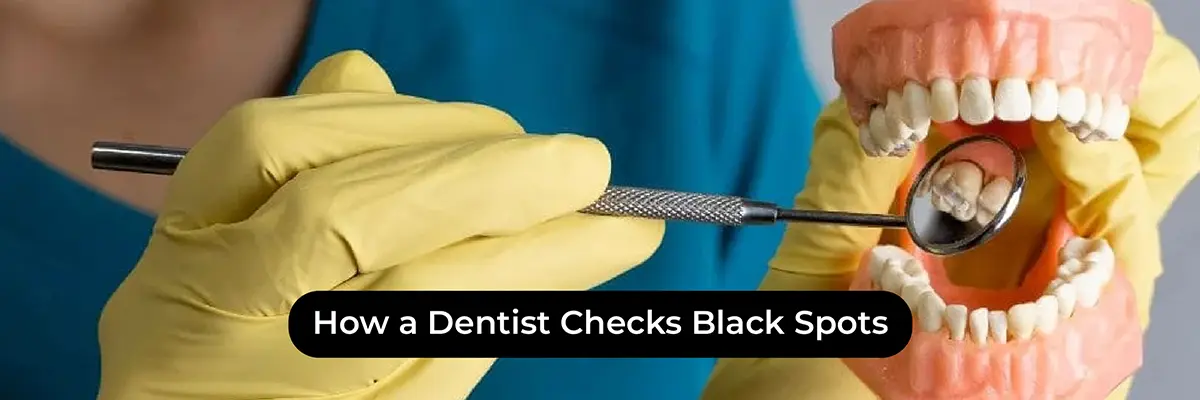
The dentist will look at the shape, location and surface of the mark. They may test the tooth for sensitivity and examine the nearby gums. Dental X-rays can show decay between teeth, below old fillings or close to the nerve.
This examination helps separate harmless staining from a problem that needs treatment. It also prevents unnecessary whitening or drilling.
How a Dentist Checks Black Spots
Cleaning and Gum Care
Scaling removes hardened deposits from the tooth and below the gumline. Polishing then smooths the enamel and clears many surface stains. In selected gum conditions, Laser Dentistryg may support treatment after a complete periodontal assessment.
Fillings, Root Canal and Crowns
A dentist removes decayed tissue before restoring the tooth with a filling. Deep infection may require root canal therapy. When the remaining tooth needs added protection, a crown can restore normal shape and chewing strength.
If severe decay or fracture leaves no reliable way to save the tooth, Surgical Extraction may become necessary. Dentists usually consider removal only after reviewing restorative options.
Cosmetic Options for Stained Teeth
Dark marks that affect appearance but do not involve active disease may respond to Cosmetic Dentistry. Depending on the cause, treatment may include whitening, bonding, veneers or replacing an old dark filling.
Overlapping teeth can also hold plaque in spaces that are difficult to reach. Teeth Straightening can improve access for brushing and flossing while supporting better long-term oral hygiene.
How to Prevent Black Tartar and Tooth Stains
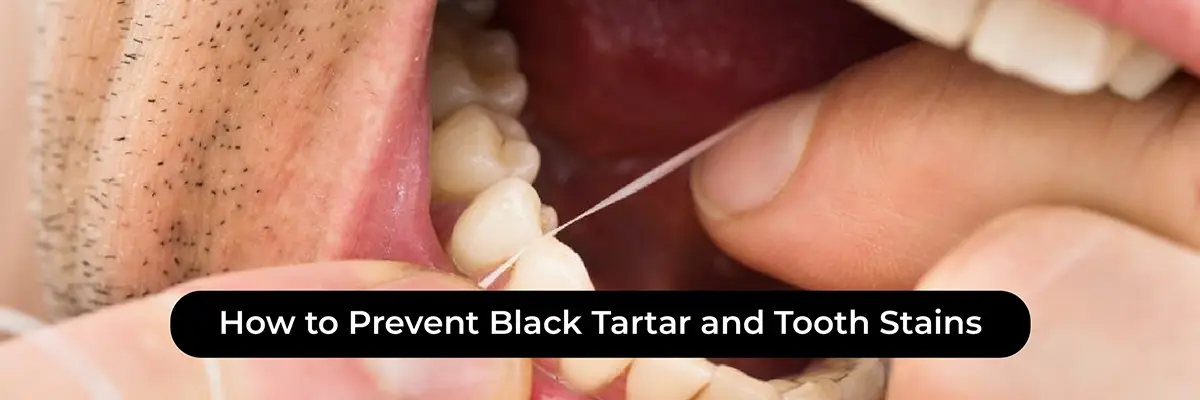
Brush twice daily with fluoride toothpaste and floss once a day. Take extra care around the gumline, crowded areas and back teeth. Rinse with water after drinking tea or coffee, reduce frequent sugary snacks and avoid tobacco.
Routine dental visits help catch decay before it grows. Professional cleaning also removes tartar that home care cannot clear. Cosmodontist Dental Clinic can advise how often you need check-ups based on your gum health, cavity history and oral hygiene.
When Should You See a Dentist?
Book an appointment when a black spot remains after brushing, grows larger or starts causing pain. Bleeding gums, swelling, bad breath, sensitivity, a loose filling or a dark tooth after injury also need attention.
Early treatment usually requires less work and protects more of the natural tooth.
FAQs
1. Can brushing remove black spots?
Brushing may remove food debris, but it cannot clear tartar, decay or deep stains.
2. Is black tartar harmful?
Yes. It can irritate the gums and raise the risk of gum disease.
3. Can whitening remove every dark mark?
No. Whitening treats stains but cannot repair cavities or remove hardened tartar.
4. Why has one tooth turned black?
A single tooth may darken after injury, deep decay or nerve damage.
5. Can black spots be prevented?
Regular brushing, flossing, professional cleaning and avoiding tobacco can reduce the risk.