Dental veneers are a common cosmetic dental treatment used to improve the look of teeth in a simple and effective way. Many people search for dental veneers: pros and cons before deciding because the treatment changes both appearance and tooth structure.
At Cosmodontist Dental Clinic, dentists first evaluate oral health before suggesting veneers so results stay natural and long-lasting.
What are veneers?
Veneers are thin shells placed on the front surface of teeth to improve shape, color, and alignment.
Common search terms:
- What are veneers
- What is veneers teeth
- Veneers for teeth
- Tooth veneers
- Veneers teeth
Key points:
- Made from porcelain or composite material
- Custom designed for each patient
- Bonded permanently to teeth surface
- Used for cosmetic smile correction
How do veneers work?
Veneers work by covering the visible part of teeth and improving their appearance instantly.
Simple process:
- Dental check-up and smile analysis
- Minor enamel reshaping
- Impression or digital scan
- Custom veneer creation
- Final bonding on teeth
This treatment is widely used for chipped, stained, or uneven teeth.
Why dentists sometimes advise against veneers
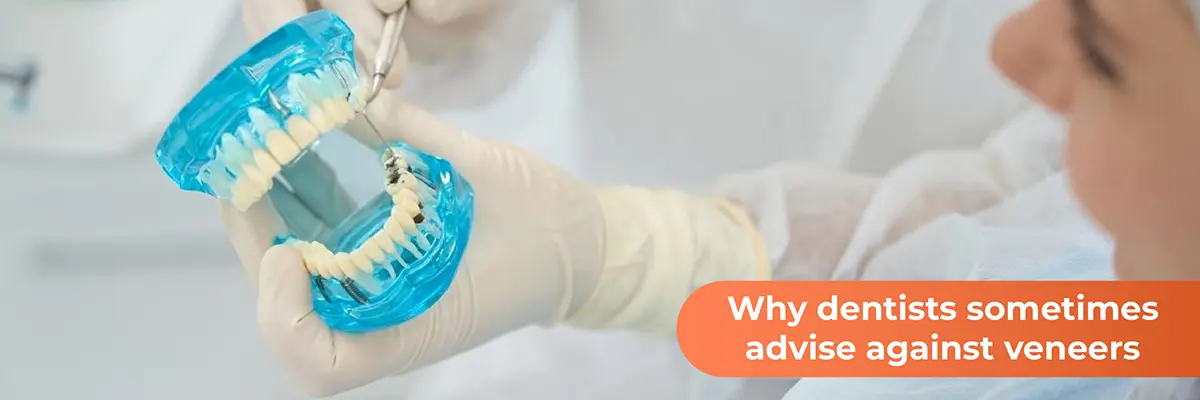
Dentists may not recommend veneers in every case because the procedure changes natural teeth permanently.
Main reasons:
- Enamel removal cannot be reversed
- Not suitable for weak or decayed teeth
- Gum disease must be treated first
- May require replacement after years
- Risk of sensitivity in some cases
Benefits of dental veneers
Veneers are popular because they improve smile appearance quickly and effectively.
Advantages:
- Improves tooth color instantly
- Fixes chipped or worn teeth
- Helps close small gaps
- Creates a uniform smile line
- Natural-looking cosmetic results
Why patients choose veneers:
- Fast smile makeover
- Long-lasting results
- Stain resistance (especially porcelain)
- Boost in confidence
Downsides of veneers
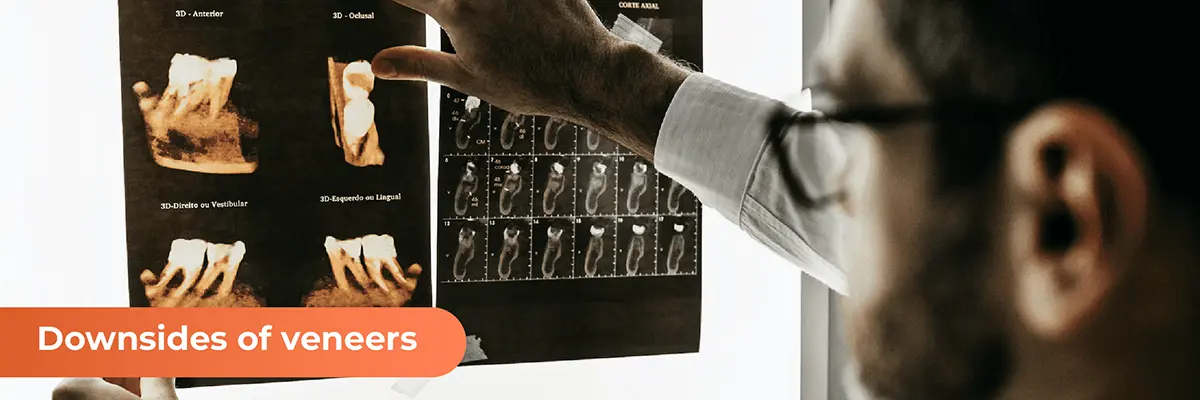
Understanding limitations helps patients make better decisions.
Common disadvantages:
- Permanent enamel removal
- Higher cost than whitening
- Possible tooth sensitivity
- Can chip under pressure
- Not reversible once placed
Additional concern:
If not done properly, veneers may look bulky or unnatural.
What happens after 10 years of veneers?
After 10 years, veneers may still look good, but natural changes can occur.
Possible outcomes:
- Wear at edges
- Color mismatch over time
- Gum line changes
- Replacement may be needed
Care tips:
- Regular dental visits
- Avoid biting hard foods
- Maintain oral hygiene
Are dental veneers worth it?
Veneers are worth it for patients who want a long-term cosmetic improvement.
Good candidates:
- Discolored teeth
- Minor alignment issues
- Chipped or uneven teeth
- People wanting smile enhancement
Not ideal for:
- Severe tooth decay
- Gum infections
- Poor oral hygiene habits
Bad veneers – what can go wrong?
Poor-quality veneers can affect both appearance and comfort.
Problems include:
- Uneven shape
- Artificial look
- Gum irritation
- Bite discomfort
Choosing an experienced clinic like Cosmodontist Dental Clinic reduces these risks significantly.
Dental veneers care tips

Proper care increases lifespan and keeps teeth healthy.
Daily care:
- Brush twice a day
- Use soft toothbrush
- Avoid hard biting habits
- Floss regularly
- Visit dentist for check-ups
FAQs
1. Why do dentists advise against veneers?
Dentists may avoid veneers if teeth are weak, decayed, or if the patient is not ready for permanent enamel removal.
2. What are the downsides of veneers?
Downsides include cost, permanent tooth preparation, sensitivity, and possible future replacement.
3. What happens after 10 years of having veneers?
They may need replacement due to wear, gum changes, or minor damage over time.
4. Are dental veneers worth it?
Yes, they are worth it for people who want long-term smile improvement and have healthy teeth.