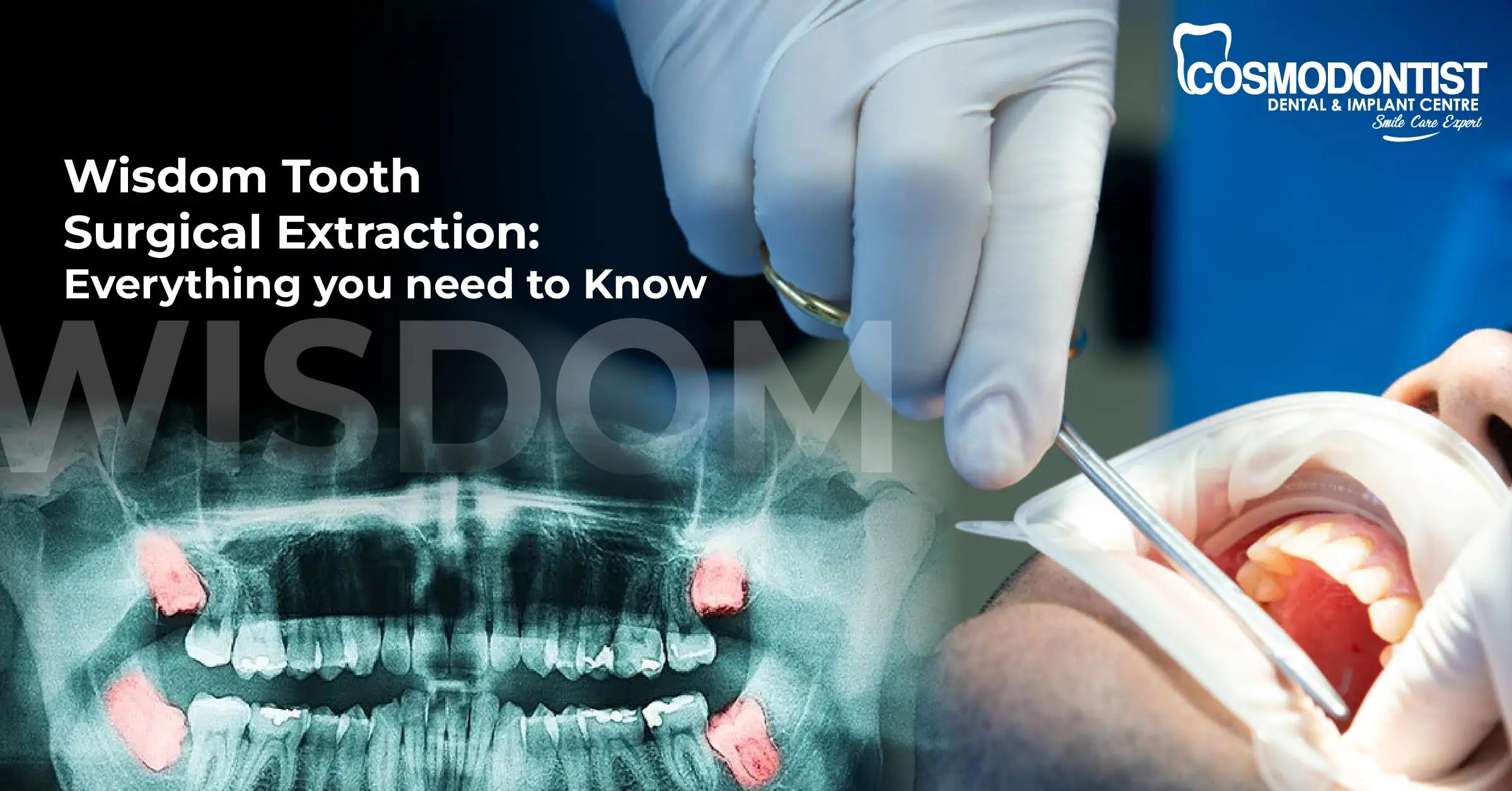
A wisdom tooth usually starts bothering people when there is no proper space left in the mouth. Some feel pain near the back teeth, while others notice swollen gums, difficulty chewing, or pain while opening the mouth. Food getting stuck near the gums is also very common. In many cases, the wisdom tooth grows sideways or stays trapped inside the gums. Dentists call this an impacted wisdom tooth. If ignored for too long, it can lead to infection, swelling, and pressure on nearby teeth. At Cosmodontist Dental Clinic, wisdom teeth removal is one of the common treatments patients visit for, especially when the pain keeps returning again and again.
Why Wisdom Teeth Start Hurting
Wisdom teeth are the last molars that appear in the mouth. They usually come during the late teenage years or early twenties. Since they arrive late, the jaw often does not have enough room for them.
Because of this, the tooth may:
- Stay partly inside the gums
- Grow at an angle
- Push against nearby teeth
- Cause swelling near the gums
- Collect food and bacteria around the area
Some people feel constant pressure in the jaw, while others get sudden pain while eating.
Signs You May Need Wisdom Tooth Removal
Not every wisdom tooth creates trouble, but certain symptoms should not be ignored.
Common warning signs include:
- Pain near the last tooth
- Swelling in the gums
- Difficulty chewing food
- Bad smell from the mouth
- Jaw stiffness
- Pain while opening the mouth
- Repeated infection near the gums
If these problems continue for weeks or months, the dentist may suggest wisdom tooth extraction.
What Happens During the Extraction
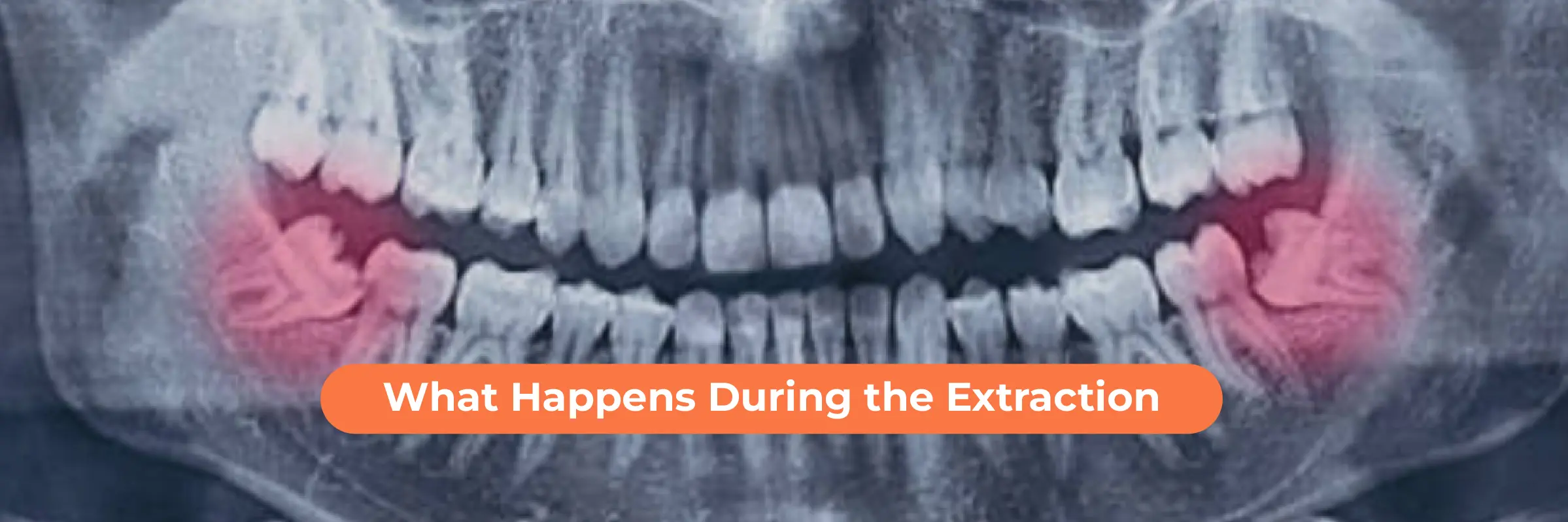
Before starting the procedure, the dentist checks the tooth position with a dental X-ray. This helps in understanding whether the tooth is fully visible or trapped under the gums.
The area is made numb before the extraction starts. If the tooth is impacted, a small opening may be made in the gums to remove it carefully. Sometimes the tooth is removed in smaller sections to avoid excess pressure on the jaw.
Most patients go home on the same day after the tooth extraction.
Wisdom Teeth Removal Recovery
The mouth usually takes a few days to settle after wisdom teeth removal. Mild swelling and soreness are common during the beginning.
These simple things help during recovery:
- Eat soft food for the first few days
- Avoid chewing from the treated side
- Use an ice pack if swelling appears
- Keep the mouth clean gently
- Avoid smoking and very spicy food
- Take medicines properly
People often search about wisdom teeth removal recovery because they worry about pain after surgery. Healing is usually manageable when proper care is followed.
Another common question is: when can I eat solid food after tooth extraction? Most patients slowly return to regular food once chewing becomes comfortable again.
Why Early Treatment Helps

An infected wisdom tooth rarely improves on its own for long. The pain may settle for a few days and then return with more swelling or discomfort. Delaying treatment can also affect nearby teeth and gums.
At Cosmodontist Dental Clinic, patients are properly examined before planning wisdom tooth removal so the treatment stays safe and comfortable from start to finish.
FAQs
1. When do wisdom teeth come in?
Wisdom teeth usually appear between 17 and 25 years of age.
2. Can wisdom tooth pain come and go?
Yes, many people feel pain on and off before the tooth becomes more problematic.
3. Is wisdom tooth extraction painful?
The area is numbed before the procedure, so patients usually feel pressure more than pain.
4. How long does wisdom teeth removal recovery take?
Most people feel better within a few days after the extraction.
5. When can I eat solid food after tooth extraction?
Solid food can usually be started slowly once the gums feel less sore and chewing becomes easier.