Quick Answer
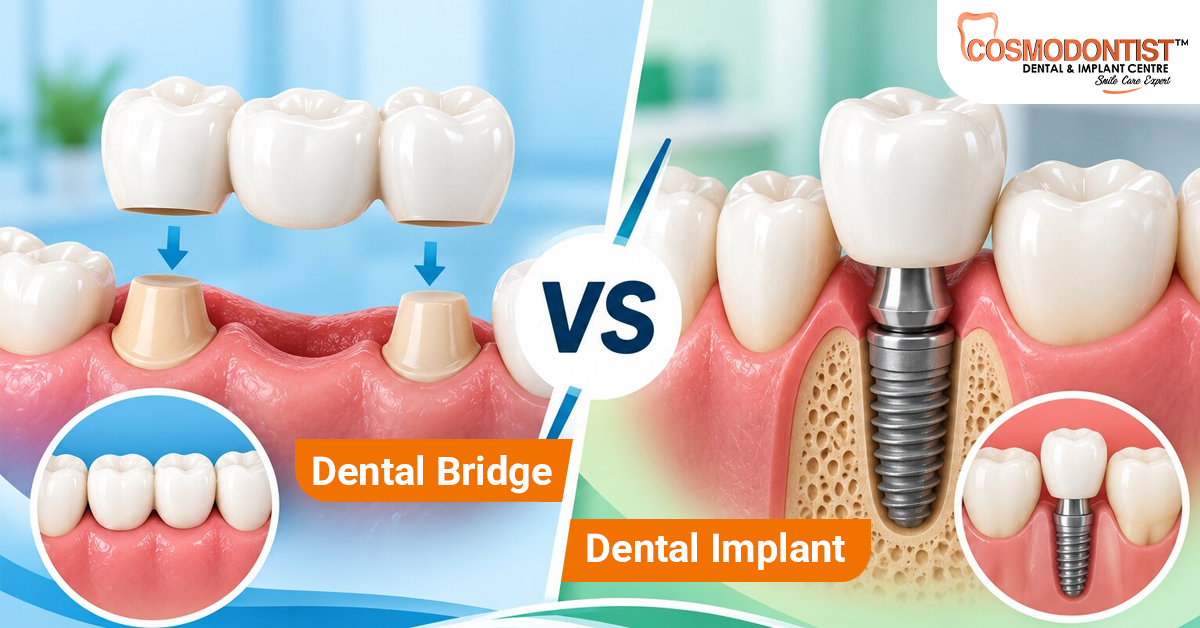
A dental implant is often better for replacing one missing tooth when the neighbouring teeth are healthy and there is enough jawbone. It replaces the missing root without trimming other teeth. A dental bridge may be better if nearby teeth already need crowns or you want treatment without implant surgery.
Key Facts
- Dental implant: Replaces a missing tooth using a post placed in the jawbone.
- Dental bridge: Uses nearby teeth to support a replacement tooth.
- Treatment time: Bridges are usually quicker than implants.
- Cost: Dental bridges generally have a lower initial cost.
- Lifespan: Implants may last decades, while bridges often last 5–15 years
- Best choice: Depends on gum health, jawbone, neighbouring teeth, and budget.
A missing tooth may not bother you much at first, especially if it is at the back of your mouth. But over time, you might notice food getting trapped in the gap or find yourself chewing on one side. The teeth next to the empty space may also start moving.
If you want to replace that tooth, your dentist may suggest a dental implant or a bridge. Both can help you eat and smile comfortably again, but they work in different ways.
The Dental Implant vs Bridge decision depends on the condition of your gums, jawbone, nearby teeth, and how much you want to spend.
Dental Implant vs Dental Bridge: Which Is Better for a Missing Tooth and Why Does It Matter?
Suppose you lose a tooth, but the teeth on either side are perfectly healthy. Would you want your dentist to trim those healthy teeth to support a bridge?
That is one reason many people consider dental implants.
An implant stands on its own. A traditional bridge takes support from neighbouring teeth. Neither treatment is right for everyone.
If the nearby teeth already have large fillings or need crowns, a bridge could make more sense. Your dentist needs to check your mouth before recommending either option.
What Is a Dental Implant?
A dental implant is a small metal post that a dentist places in your jawbone to replace a missing tooth root. After the area heals, the dentist attaches a crown that looks like a natural tooth.
People looking for dental implants in Gurgaon often choose this treatment because it doesn't usually involve cutting down the teeth beside the gap.
Why Do People Choose Dental Implants?
- They leave healthy neighbouring teeth untouched.
- They feel stable while eating and speaking.
- They help reduce bone loss around the missing tooth.
- They look similar to natural teeth.
- They can last many years with proper care.
However, implants require surgery. If you have lost considerable jawbone, your dentist may recommend bone grafting and sinus procedures before placing an implant.
Smoking, uncontrolled diabetes, and gum disease can also affect healing.
What Is a Dental Bridge?
A dental bridge fills the space left by a missing tooth. A traditional bridge uses the teeth on either side of the gap for support.
The dentist usually shapes these teeth, takes impressions or digital scans, and fits a bridge made of connected artificial teeth and crowns.
Unlike an implant, a conventional dental crown and bridge doesn't need surgery in the jawbone.
Dental Bridge Advantages and Disadvantages
Advantages:
- Treatment usually takes less time than an implant.
- No implant surgery is needed.
- It can replace one or more missing teeth.
- The starting cost is often lower.
Disadvantages:
- Healthy teeth may need trimming.
- Food can collect underneath the bridge.
- The supporting teeth may develop decay.
- The bridge may need replacing after several years.
A bridge works best when the teeth holding it are strong enough to handle chewing pressure.
Dental Implant vs Bridge: Main Differences
|
Dental Implant |
Dental Bridge |
|
Fixed inside the jawbone |
Supported by nearby teeth |
|
Usually leaves other teeth untouched |
May require trimming nearby teeth |
|
Requires surgery |
Usually doesn't require surgery |
|
Healing can take months |
Often completed within weeks |
|
Helps maintain jawbone |
Doesn't replace the missing root |
|
Usually costs more initially |
Usually costs less initially |
The main difference comes down to where the replacement tooth gets its support.
Dental Bridge vs Implant Cost: Which Costs Less?
When comparing dental bridge vs implant cost, don't look at the first bill alone.
A bridge usually costs less initially because it doesn't require implant surgery. However, the price depends on the number of teeth involved and the material used.
Implant costs may include scans, surgery, the implant post, an abutment, and a crown. Bone grafting can add to the expense.
A bridge may need replacement later, while an implant crown can also require repairs.
Ask your dentist for a written estimate covering the entire treatment.
How Long Do Dental Bridges Last?
Many dental bridges last around 5 to 15 years. Some last longer when patients clean them properly and attend regular dental checkups.
Dental implants can last for decades, although the crown attached to the implant may eventually need replacement.
Neither option lasts forever without care.
With a bridge, cleaning beneath the false tooth is especially important. Special floss or interdental brushes can help remove trapped food.
Single Tooth Implant vs Bridge: Which Should You Pick?
If you have one missing tooth, consider these situations before making your choice.
- Your nearby teeth are healthy: A single tooth implant may be a better choice because the dentist won't need to reshape them.
- Your nearby teeth already need crowns: A dental bridge might solve both problems together.
- You have lost jawbone: Your dentist must check whether an implant is possible without additional treatment.
- You want treatment completed sooner: A bridge may take less time.
- You want to avoid surgery: A conventional bridge may suit you better.
For patients missing several teeth, multiple teeth dental implants or implant-supported bridges may also be worth discussing.
Can You Leave a Missing Tooth Untreated?
Not every missing tooth needs replacement, but leaving a gap can sometimes cause problems.
The neighbouring teeth may lean towards the empty space. The opposing tooth may also move because it no longer meets another tooth when you bite.
You might start chewing on one side, which can make eating uncomfortable.
Missing tooth roots also contribute to bone loss in that area. An implant can help maintain bone around the replacement, although it cannot prevent every type of jawbone change.
Your dentist can tell you whether replacing the tooth is necessary.
Which Treatment Makes More Sense for Your Teeth?
Choosing an implant or bridge for missing tooth replacement isn't just about appearance. Think about how healthy your other teeth are, how long treatment will take, and whether you're comfortable with surgery.
At Cosmodontist Dental Clinic in Gurgaon, patients can discuss single tooth implants, dental bridges, and other tooth replacement treatments. A dental examination and X-rays help the dentist check your teeth, gums, and jawbone before suggesting a treatment.
Frequently Asked Questions
1. Is a dental implant better than a bridge?
An implant may be better if your neighbouring teeth are healthy and you have enough jawbone. A bridge can also work well.
2. Is a dental bridge cheaper than an implant?
Yes, a traditional bridge usually costs less initially. The final cost depends on the materials and treatment needed.
3. Can a bridge replace one missing tooth?
Yes. A fixed dental bridge can replace a single missing tooth using neighbouring teeth for support.
4. Do dental implants hurt more than bridges?
Implant surgery uses local anaesthesia. You may experience swelling or soreness afterwards. Bridge preparation can also cause temporary sensitivity.
5. Can I replace an old dental bridge with an implant?
Sometimes. Your dentist must check your jawbone, gum health, and the condition of nearby teeth before deciding.
