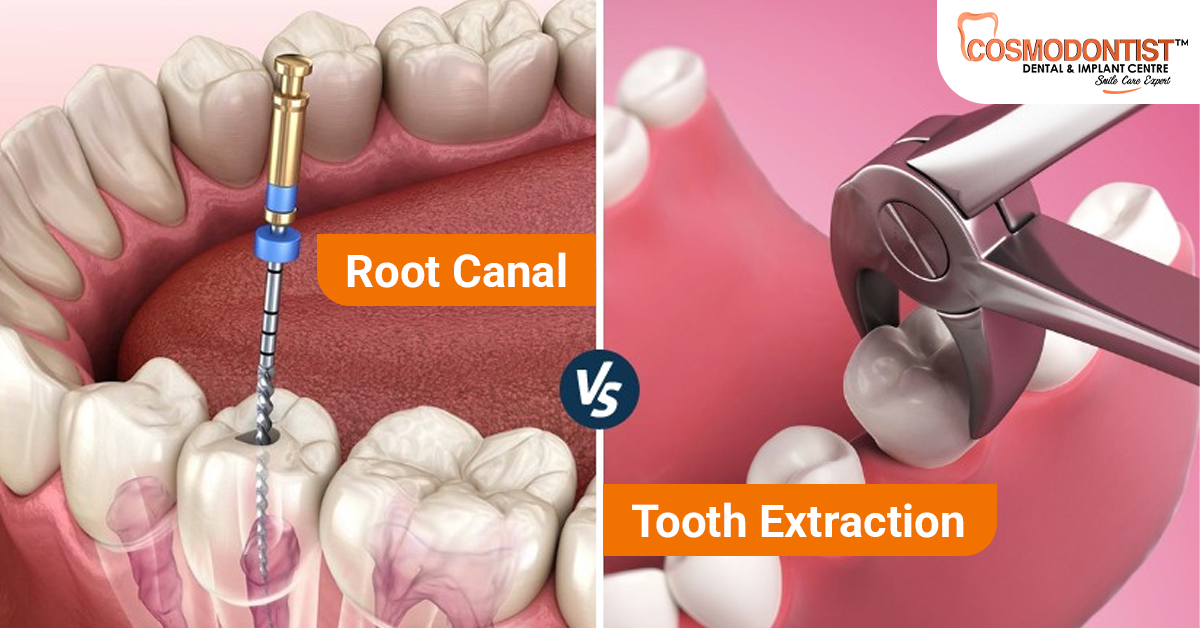
Quick Answer
A root canal is usually better when the dentist can save your natural tooth. It removes infected tissue while keeping the tooth in place. Extraction becomes necessary when the tooth is too damaged to repair. The right choice depends on the infection, tooth structure, root condition, and gum health.
Key Facts
- Root canal: Treats infection while saving your natural tooth.
- Tooth extraction: Removes a tooth that cannot be repaired.
- Pain: Both procedures use local anaesthesia.
- Recovery: Root canal recovery is usually quicker than extraction healing.
- Cost: Extraction often costs less initially, but replacing the tooth adds to the expense.
- Best choice: Saving a natural tooth is generally preferred when treatment has a good chance of success.
A painful or infected tooth can make eating, sleeping, and even drinking water uncomfortable. When the damage reaches deep inside your tooth, your dentist may suggest a root canal or extraction. But which treatment should you choose?
The Root Canal vs Extraction decision depends on the tooth's condition, remaining structure, infection, and long-term dental health. A root canal can save your natural tooth, while extraction removes a tooth that may no longer be repairable.
Understanding the differences can help you make the right choice before agreeing to treatment.
Root Canal vs Tooth Extraction: Which Is Better for Saving Your Natural Teeth?
When comparing root canal vs extraction, dentists generally prefer saving a natural tooth whenever it has enough healthy structure and support.
A root canal removes infected tissue from inside the tooth without removing the tooth itself. Extraction removes the entire tooth from its socket.
The important question isn't simply which procedure stops the pain faster. It's whether the tooth can function properly for years after treatment.
For example, a molar with infected pulp but strong roots may benefit from root canal treatment. However, a tooth with a vertical root fracture may require removal.
What Is Root Canal Treatment?
Root canal treatment repairs a tooth affected by deep decay, damaged pulp, or infection. During the procedure, the dentist removes infected tissue, cleans the root canals, and seals them to prevent further bacterial contamination.
A dental filling or crown then restores the tooth's chewing function.
When Is a Root Canal Recommended?
- Deep cavities reaching the tooth's pulp
- Persistent toothache or sensitivity
- Infection around the tooth's root
- Cracked teeth with repairable damage
- Swelling caused by infected pulp
Modern painless root canal treatment uses local anaesthesia to reduce discomfort. Some patients need additional appointments depending on the infection and tooth structure.
What Is Tooth Extraction?
Tooth extraction involves removing a damaged, infected, or severely weakened tooth.
Dentists usually recommend extraction when restoring the tooth is unlikely to provide a reliable long-term result.
When Is Tooth Removal Necessary?
- Severe decay leaving insufficient tooth structure
- Vertical root fractures
- Advanced gum disease with significant bone loss
- Teeth damaged beyond repair
- Certain impacted or badly positioned teeth
Some cases require surgical extraction, particularly when a tooth has broken below the gumline or cannot be removed through a simple procedure.
After removal, patients may consider a dental implant or bridge to replace the missing tooth.
Root Canal vs Extraction: Key Differences
|
Factors |
Root Canal |
Tooth Extraction |
|
Main purpose |
Saves the natural tooth |
Removes the damaged tooth |
|
Tooth preservation |
Yes |
No |
|
Anaesthesia |
Local anaesthesia |
Local anaesthesia |
|
Recovery |
Usually a few days of tenderness |
Gum and socket healing takes longer |
|
Additional treatment |
Filling or dental crown |
Implant, bridge, or denture when appropriate |
|
Long-term outcome |
Depends on tooth condition and restoration |
Depends on healing and tooth replacement |
The tooth extraction vs root canal comparison should include future dental treatment, not just the first appointment.
Root Canal Benefits and Disadvantages
A root canal offers several advantages when the affected tooth can be restored successfully.
Benefits:
- Preserves your natural tooth and chewing ability
- Maintains the existing tooth position
- Removes infected pulp and relieves toothache
- Avoids the need to replace a missing tooth
- Helps maintain your natural smile
Disadvantages:
- Some teeth need a crown after treatment
- Complex infections may require multiple visits
- Retreatment may become necessary
- Severely damaged teeth may not survive long-term
Root canal treatment cannot repair every damaged tooth. Your dentist must assess the remaining tooth structure before recommending it.
Root Canal vs Extraction Cost: Which Is More Affordable?
The root canal vs extraction cost depends on the affected tooth, treatment complexity, and additional procedures.
A simple extraction may initially cost less than a root canal. However, replacing the removed tooth with a single tooth dental implant or dental crown and bridge can increase the overall expense.
Root canal expenses may also include a permanent filling or crown.
Instead of comparing only the procedure charges, ask your dentist for the complete treatment estimate, including any future restoration.
Root Canal or Extraction: Which Is Better for Long-Term Dental Health?
Wondering, is root canal better than extraction? In many cases, yes, provided the tooth has a good chance of remaining functional.
Before deciding between root canal treatment or tooth removal, dentists should examine:
- Tooth structure: Is enough healthy tooth available for restoration?
- Root condition: Are the roots intact or severely fractured?
- Gum health: Does the tooth have sufficient bone support?
- Infection: Can treatment adequately address the infection?
- Future restoration: Will the tooth need a crown, or will extraction require replacement?
A dental examination and X-rays help answer these questions.
What Happens If You Extract a Tooth and Don't Replace It?
Leaving a missing tooth untreated can affect your bite. Nearby teeth may gradually shift, and chewing certain foods may become difficult.
Missing teeth can also lead to bone loss in the affected area.
Depending on the situation, dentists may recommend dental implants in Gurgaon, implant-supported bridges, or conventional dental bridges to restore chewing function.
However, not every extracted tooth needs replacement. Your dentist should explain whether replacement is necessary in your particular case.
Make the Right Decision Before Removing Your Tooth
A tooth that hurts badly doesn't always need extraction. Similarly, keeping a tooth with severe structural damage may lead to repeated treatment and unnecessary expense.
At Cosmodontist Dental Clinic, Gurgaon, patients can seek an assessment for root canal treatment, surgical extraction, and tooth replacement options. The clinic provides dental services at DLF Phase 4 and Sector 65. A proper examination can help determine whether saving the tooth is practical or removal offers a more suitable outcome.
Frequently Asked Questions
1. Is root canal better than extraction?
Usually, yes, if your tooth can be successfully restored. Root canal treatment preserves the natural tooth and its chewing function.
2. Which is more painful, root canal or extraction?
Both procedures use local anaesthesia. Recovery discomfort varies, but extraction generally involves more tissue healing.
3. Can a badly infected tooth be saved with a root canal?
Sometimes. The dentist must assess the infection, remaining tooth structure, roots, and surrounding bone before recommending treatment.
4. Is extraction cheaper than root canal treatment?
Simple extraction often costs less initially, but replacing the missing tooth may increase the total treatment cost.
5. Can I get a dental implant after tooth extraction?
Yes, in many cases. Implant placement depends on bone availability, gum health, infection, and the dentist's assessment.
